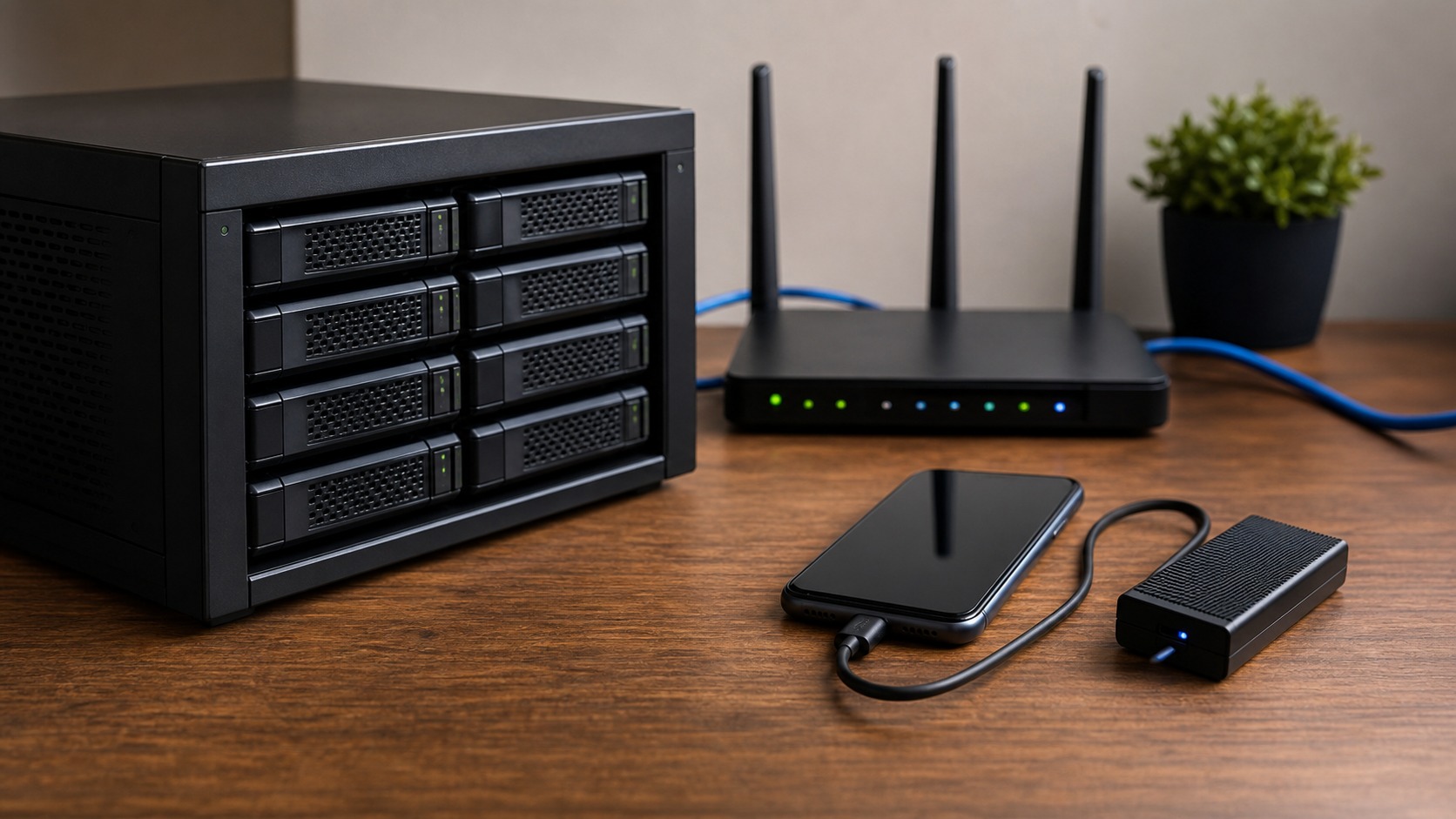
Nodes Are the Network's Independent Checkpoints
Blockchain nodes are computers that participate in keeping a network informed, synchronized, and accountable. Some store the full ledger, some validate every rule, some relay transactions, and some help lightweight users access data. Without nodes, a blockchain would be a claim made by a few operators rather than a record that many independent participants can check.
A: It is a network participant that stores, relays, verifies, or serves blockchain data.
A: No. Many nodes verify and relay without producing blocks.
A: They let participants enforce rules independently.
A: It stores deeper historical state used for audits, explorers, and analytics.
A: They can be, but they verify less locally than full nodes.
A: Yes, and healthy networks are designed to continue when individual nodes fail.
A: It reduces correlated failures and gatekeeper risk.
A: Personal nodes can reduce reliance on third-party query services.
A: Quality, diversity, and verification duties matter as much as raw count.
A: Nodes turn blockchain rules into independently checked infrastructure.
What a Node Actually Does
A node is a participant in the network's communication and verification system. At minimum, it connects to peers, receives data, checks certain rules, and shares information. More capable nodes store more history and perform deeper validation. The specific duties depend on the blockchain and the type of node being discussed.
The most important idea is independence. A node can check the network's rules for itself instead of accepting whatever one website, wallet provider, exchange, or infrastructure company says. That ability is a major reason public blockchains can be more than shared branding around a private database.
Nodes are not all equal. A mining machine, validator, archive server, light client, and wallet backend may all interact with the network differently. Calling everything a node can blur useful distinctions, so readers should ask what the machine stores, verifies, relays, and decides.
Full Nodes and Rule Enforcement
A full node downloads and verifies the blockchain according to the protocol rules. It checks blocks and transactions, confirms that coins or account balances are not spent improperly, and rejects data that violates the rule set. In many networks, full nodes do not need to produce blocks to be important.
This rule enforcement is a quiet form of power. If block producers create invalid blocks, full nodes can refuse them. That means the network's accepted history depends not only on those who propose blocks, but also on those who independently verify whether the proposals are legal.
Validators, Miners, and Block Producers
Validators and miners are specialized participants that help add new blocks. In proof-of-work systems, miners compete to produce blocks through hash power. In proof-of-stake systems, validators are selected or weighted according to stake and protocol rules. In permissioned systems, known operators may take turns or vote.
These participants are nodes in a broad sense, but their role is more active than simple relay or observation. They influence ordering, earn rewards, and may be penalized for certain failures. Their behavior affects finality, censorship resistance, liveness, and the overall user experience.
A healthy network separates block production from blind trust. Even if validators or miners propose blocks, other nodes should still be able to check the result. That separation keeps block producers accountable to the rules rather than letting them define reality by themselves.
Archive Nodes and Historical Memory
Archive nodes preserve deeper historical state than ordinary full nodes may keep. They are valuable for explorers, analytics, audits, application debugging, and research. When someone wants to ask what the network looked like at an earlier point in time, archive infrastructure often makes the answer practical.
Archive nodes can be expensive because history grows. That cost creates a subtle centralization risk if only a few companies can afford to preserve and serve old data. Networks need a realistic plan for historical access, especially when applications, regulators, or users depend on long-term audit trails.
Light Clients and Everyday Access
Light clients are designed for devices that cannot store or verify everything. They use compact proofs, trusted checkpoints, or service providers to gain confidence without carrying the entire chain. This matters because most users will not run heavy infrastructure on a phone.
The tradeoff is that light clients usually trust more assumptions than full nodes. Some designs minimize that trust through cryptographic proofs. Others rely heavily on servers. A good wallet explains the security model clearly enough that users know whether they are independently verifying or receiving convenient access.
Light clients do not make full nodes unnecessary. They often depend on full nodes, archive services, or validators somewhere else. The practical network needs both: robust independent verification and approachable access for ordinary users.
Synchronization and Peer-to-Peer Relay
Nodes keep each other updated through peer-to-peer communication. They announce transactions, share blocks, request missing data, and compare chain tips. This relay system lets information spread without one central broadcaster controlling the flow.
Synchronization is harder than it sounds. Nodes may be offline, slow, behind firewalls, or connected to peers with different views. Good protocol design helps honest nodes catch up, reject bad data, and find useful peers. The network's resilience depends on these ordinary communication details.
Why Node Diversity Matters
A blockchain can have many nodes on paper while still relying on the same cloud provider, software client, geography, or infrastructure company. That kind of concentration can create correlated failure. If one provider has an outage or one client has a bug, the network may suffer even though the node count looks healthy.
Diversity means different operators, locations, clients, hardware, and motivations. It also means users and organizations have the option to run their own infrastructure when the stakes justify it. The goal is not perfect equality. The goal is to avoid a situation where a small group can quietly become the network's gatekeeper.
This is why node requirements matter in scaling debates. If running a useful node becomes too expensive, fewer people can verify the ledger independently. The network may become faster while losing one of the properties that made it valuable.
The Simple Reason Networks Need Nodes
Networks need nodes because blockchains are meant to be checked, not merely announced. Nodes store evidence, relay messages, enforce rules, and give users a path to verify what happened. They turn a protocol from a document into a living system.
For beginners, the best question is not just how many nodes exist. It is what those nodes do and who can run them. A large number of passive or dependent nodes is less meaningful than a diverse set of participants able to validate, relay, and recover.
Blockchain nodes are the infrastructure of trust minimization. They make it harder for any single party to rewrite history, hide information, or define the ledger alone.
This extra layer of context matters because the technical detail only becomes useful when it changes how someone evaluates security, cost, privacy, or operational responsibility in a real network.
A Practical Reading Habit
When reading about what are blockchain nodes and why does the network need them?, separate the data structure from the service built around it. The protocol defines what can be checked. Wallets, explorers, custodians, and applications decide how much of that evidence users actually see.
That distinction keeps the explanation grounded. A blockchain can provide strong verification while a particular interface hides important details. A tool can look simple while depending on infrastructure that deserves scrutiny. Readers who ask what is verified, who verifies it, and what happens during failure will understand the topic more clearly than readers who memorize labels alone.
Where the Detail Shows Up for Users
The details behind what are blockchain nodes and why does the network need them? eventually surface in ordinary user experience. They influence how long people wait, how much confidence a wallet can display, how much data a service must store, and how easily a user can check a claim without trusting one company. That is why the topic belongs in a practical explainer rather than only in protocol documentation.
A good blockchain system hides some complexity from users, but it should not make verification impossible. The user interface can be simple while the underlying evidence remains available to wallets, nodes, auditors, developers, and technically curious readers. When those layers are separated well, beginners get usability and advanced participants still get a path to inspect the record.
The warning sign is when convenience becomes the only thing left. If users must trust a block explorer, a hosted wallet, a bridge operator, or a single infrastructure provider for every meaningful answer, the design may still be useful, but it is not delivering the same independence that blockchain language often implies.
Questions Worth Asking Before Trusting the Design
The first question is what can be verified independently. Some systems let ordinary nodes check the full rule set. Others require specialized hardware, professional operators, or external services. That difference affects decentralization in a concrete way because the cost of checking the record determines who can realistically participate.
The second question is what happens during stress. Networks behave differently when fees spike, peers disconnect, software clients disagree, or users rush to move assets at the same time. A design that looks elegant during calm conditions should still explain how it handles congestion, delayed data, conflicting information, and recovery after mistakes.
Why This Foundation Matters Later
Foundational details may feel slow at first, but they make advanced topics easier. Scaling, privacy, custody, interoperability, and regulation all depend on the same building blocks. Readers who understand the foundation can evaluate new products with better instincts instead of treating each new term as a separate mystery.
In that sense, what are blockchain nodes and why does the network need them? is not only a definition. It is a lens for judging whether a network's promises match its mechanics. Once readers can connect the mechanism to the tradeoff, they are less likely to be impressed by vague claims and more likely to ask the questions that reveal how the system really works.
That habit is useful across the entire blockchain space. It keeps attention on evidence, responsibilities, and failure paths, which is where the meaningful differences between networks usually appear.
The Common Mistake to Avoid
The common mistake with what are blockchain nodes and why does the network need them? is treating the concept as a static definition instead of a working part of the network. In practice, the concept affects how software behaves when data is missing, when participants disagree, when fees rise, or when users need proof that an action really happened.
Another mistake is assuming that the easiest interface shows the strongest evidence. Many tools summarize blockchain activity in a friendly way, but the summary may hide assumptions about indexing, hosting, synchronization, or third-party trust. A careful reader looks for the evidence behind the display rather than stopping at the display itself.
The best habit is to ask what an honest independent participant could check. If the answer is clear, the design is easier to trust. If the answer depends on one privileged service, then the reader has found the real tradeoff, even if the surrounding product still looks polished and convenient.
That is why foundational explainers are worth the extra patience. They give readers a way to connect everyday wallet behavior with the deeper verification machinery that makes a blockchain different from an ordinary hosted database.
For practical readers, the real value is not memorizing every internal term. The value is knowing which part of the system supplies evidence, which part supplies convenience, and which part introduces a new assumption. Once that map is clear, blockchain products become easier to compare because the reader can see whether a promise is backed by verification, infrastructure, or simple trust in an operator.